
Why Your Broilers Reach 6 Weeks and Still Look Like Layers
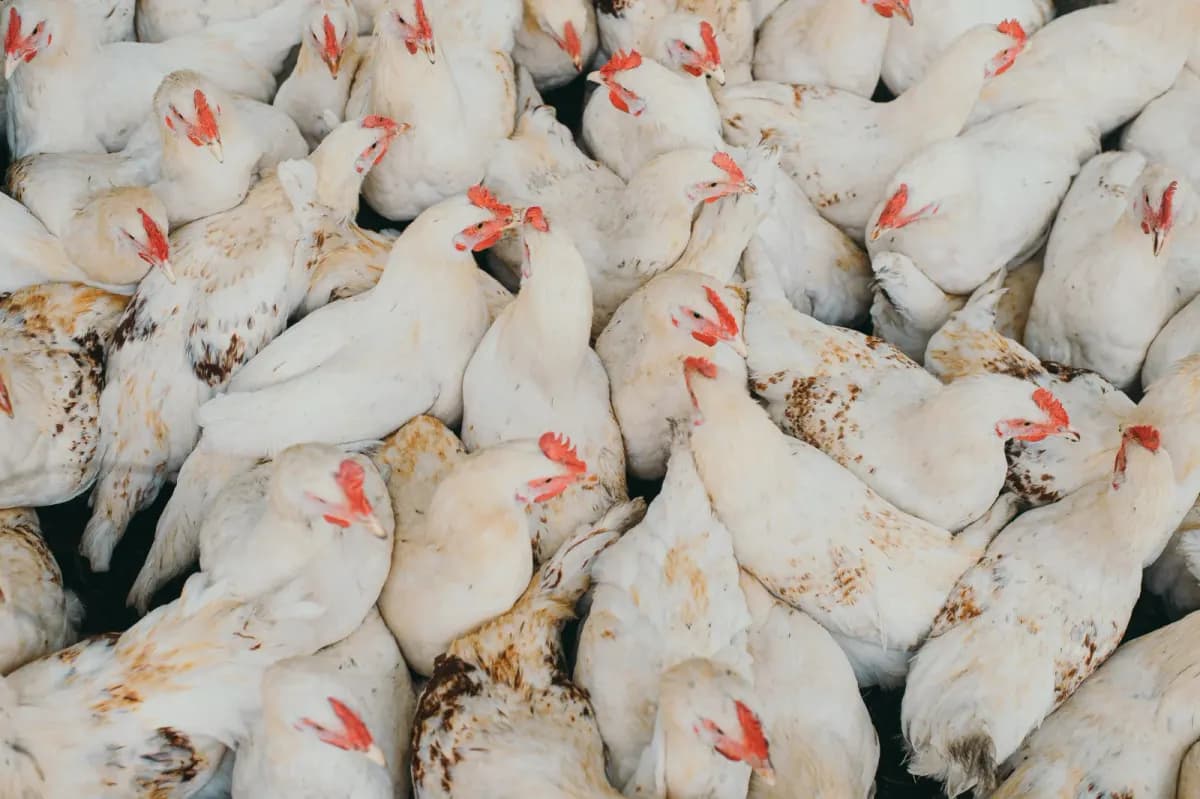
You bought day-old chicks. You fed them. You vaccinated them. You waited six weeks. And when sales day came, the buyer looked at your birds and said, "Oga, this one is not even 1.5 kg."
You are not alone. We see this story every month. The breed is rarely the problem — Cobb 500, Ross 308, Arbor Acres, all the standard commercial broilers should hit 2 kg by week 6 in Nigeria with the right management. So if yours are not, here is the honest checklist.
1. Brooding temperature was wrong (and you didn't know it)
The first 7 days set the bird for life. If brooding temperature was off by more than 3°C in either direction, growth stunts and never fully recovers.
Target: 33°C at day 1, dropping 2°C per week to 21°C by week 5. Birds tell you the truth: if they huddle under the lamp, too cold. If they spread to the corners away from heat, too hot. Even distribution = correct.
2. They didn't drink enough water in week 1
For every gram of feed a broiler eats, it must drink 1.8 to 2 grams of water. If water is dirty, too far, or the drinkers are too high, intake drops. And when water drops, feed drops. And when feed drops, weight drops.
Check: chicks should drink within 2 hours of arrival. If they have not found the water by then, your drinker positioning is wrong.
"I lost a whole batch of growth because my drinkers were too high. The chicks were drinking but the smaller ones couldn't reach. By week 2, I had a flock split into two sizes." — Musa A., broiler farmer, Kaduna
3. Feed is poor quality (or you switched too late)
The starter-grower-finisher progression exists for a reason. If you fed grower feed from day one because starter was "too expensive", your birds will never catch up. The first 21 days need 22–23% crude protein. Grower is 19–20%. That gap matters.
Also: if you are buying open-bag feed from the local mill, ask when it was milled. Feed older than 4 weeks loses 15–20% of its vitamin content.
4. Heat stress in week 4 onwards
Nigerian climate gets harsh from week 4 of a hot-season batch. Birds reduce feed intake by up to 30% when ambient temperature exceeds 32°C. Fix the heat, fix the feed intake, fix the growth.
- Ventilation: cross-flow if you can; at minimum, side-curtains rolled high during the day.
- Cool, clean water available at all times.
- Feed in the cool parts of the day — early morning, late evening.
5. The flock is uneven — and you are treating them as one
By week 3, you will start seeing a small percentage of birds visibly smaller than the rest. These "stunters" rarely catch up. Move them to a separate pen and feed them grower for another week. The main flock progresses on schedule; the small ones get a fighting chance.
How SmartFlok helps
The Flock module tracks daily weight samples — you weigh 10 birds twice a week, enter the number, and SmartFlok plots the growth curve against the breed standard. The day your average weight drifts below target, you see a red flag on your dashboard. Most farmers spot underperformance 10 days earlier than they would by eyeball.
6. Vaccination stress at the wrong time
Every vaccination causes a brief drop in feed intake. If you vaccinate during a heat wave, or stack two vaccines together, you can lose 2–3 days of growth. Spread them out, do them in the cool of the morning, and add a vitamin/electrolyte pack to the water for 2 days after.
The bottom line
Slow-growing broilers are almost never about bad chicks. They are about a small thing done wrong, every day, for 6 weeks. Get brooding right, water right, feed quality right, heat under control, and you will be weighing 2.1 kg birds at week 6 like clockwork.
Want the tools the smart farmers in this story are using? SmartFlok gives you flock records, vaccination reminders, feed and finance tracking, plus access to the largest poultry marketplace in Nigeria — all from your phone.
